

The Founder of IBD Ltd recently spoke on the mining sector and the attendant imperatives for dedicated technology and skills transfer arrangements. This was during the Power Lunch session on CNBC Africa. Watch from the link below.
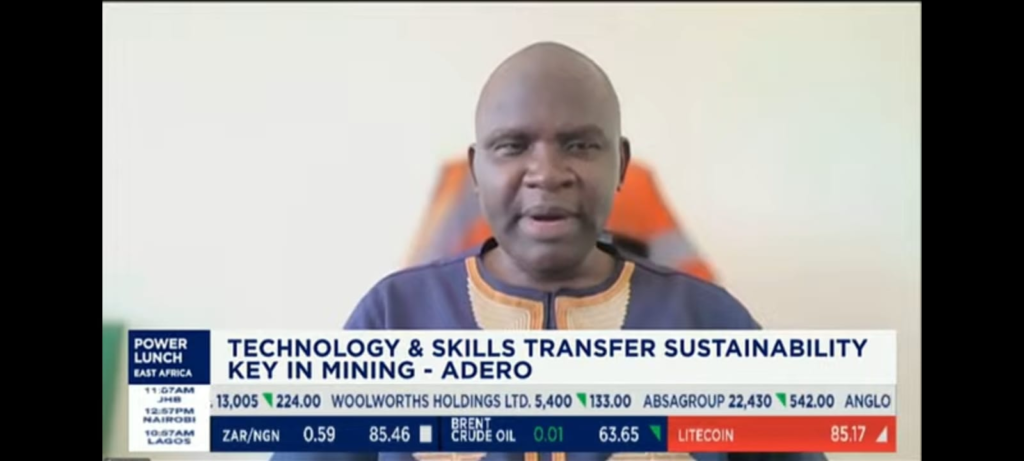
Link to watch the interview: Optimising Kenya’s mining sector – CNBC Africa
Key Points
- Kenya implements the 2016 Mining Act aimed at governance reforms
- Focus shifts to value addition, environmental compliance, and human capital
- Kenya seeks to transition from geopolitical pawns to revenue generators
- Establishment of sustainable public-private partnerships is crucial
- Environmental compliance seen as long-term investment in ESG mandates
- Discussion on NPV of green infrastructure and tools with reduced costs
- Political goodwill essential for sustainable development and policy making
Topical Summary
Keywords: climate resilience; critical minerals; environmental compliance; governance; human capital; Kenya mining sector; public-private partnerships; sustainable development; value addition.
Kenya’s mining sector is witnessing a pivotal transformation as the nation strives to harness its rich mineral resources into enduring, steady capital flows. With the enactment of the 2016 Mining Act fortifying governance frameworks, the focus is now on value addition, environmental compliance, and human resource development, alongside climate-conscious operations. This shift gains momentum as the international demand for critical minerals spikes.
In an insightful Power Lunch conversation with CNBC Africa, Dr.-Ing. Nashon Adero, the Dean of the School of Mines and Engineering at Taita Taveta University (TTU), underscored Africa’s mineral wealth, which boasts a significant portion of global reserves. He highlighted the continent’s role not only as an abundant resource pool but also as a key player in the governance of these resources. With the 2016 Mining Act, Kenya has introduced what Dr.-Ing. Adero describes as Africa’s most contemporary mining law, aligning with the 4th generation of mining law reforms on the continent.
Central to these reforms is the inclusive engagement of artisanal miners as legitimate stakeholders, ensuring transparency, predictability, and proper land management through precise surveying and mapping. A striking example of this progress is the rehabilitation of the titanium mining site in Kenya, where indigenous trees that were initially removed have been replanted, epitomising a commitment to environmental governance.
Dr.-Ing. Adero emphasised the necessity for Africa to transition from being mere geopolitical pawns to becoming strategic revenue generators. He cited the need for sustainable public-private partnerships that focus on local value addition, powered by Kenya’s academic institutions like Taita Taveta University, which is instrumental in producing skilled mining engineers. Such human capital, he argued, is vital for transforming the economic landscape through wise and innovative financial negotiations, including public-private partnerships and foreign direct investments.
Political goodwill emerged as a cornerstone in achieving sustainable development – a concept vigorously advocated since the Brundtland Report of 1987. Political leadership must extend its influence by including scholars and researchers in policy development and advisory, thereby realising models that foster local economic empowerment and value addition.
With a global shift towards sustainable development, strict adherence to Environmental, Social, and Governance (ESG) mandates in Kenya’s mining sector is positioned as more than just a cost but a long-term strategic investment. Initial costs of environmental compliance may seem steep; however, they promise substantial long-term benefits, aligning with the broader narrative of sustainability that intertwines social, economic, and ecological dimensions.
Transformative mining involves investment in other sectors like agriculture, promoting intergenerational capital exchange. This vision ensures that the local communities continue thriving beyond mining activities, leaning on sustainable agriculture, fisheries, and forestry, among others. Human capital development remains paramount, supporting a holistic approach to sustainable economic fortitude.
Moreover, the conversation touched on the Net Present Value (NPV) of green infrastructure and digital tools, illuminating their potential in reducing long-term costs. For instance, investments in solar-diesel hybrids for small-scale mining could cut operational costs by over 50%, with payback periods as short as a decade.
The roadmap presented by Dr.-Ing Adero spotlights Kenya’s potential not just as a participant in the global mineral race but as a leader poised to redefine mining with sustainable, innovative practices that transcend generational boundaries.
Great work Dr.-Ing. Adero