
Nashon Adero
Geospatial & Systems Modelling Expert (Dr.-Ing., Mining Engineering Surveys) | Author & Policy Analyst | Youth Mentor & Founder, Impact Borderless Digital | Dean, School of Mines & Engineering (TTU) | Patron, Enactus TTU
June 27, 2026
Every direct mining job has the potential to stimulate 3-10 additional jobs in other sectors through backward, forward and induced linkages. Mining has historically been an early adopter of frontier technologies—from remote sensing, automation, artificial intelligence, and digital twins, to advanced geospatial systems.
The eventful week that was
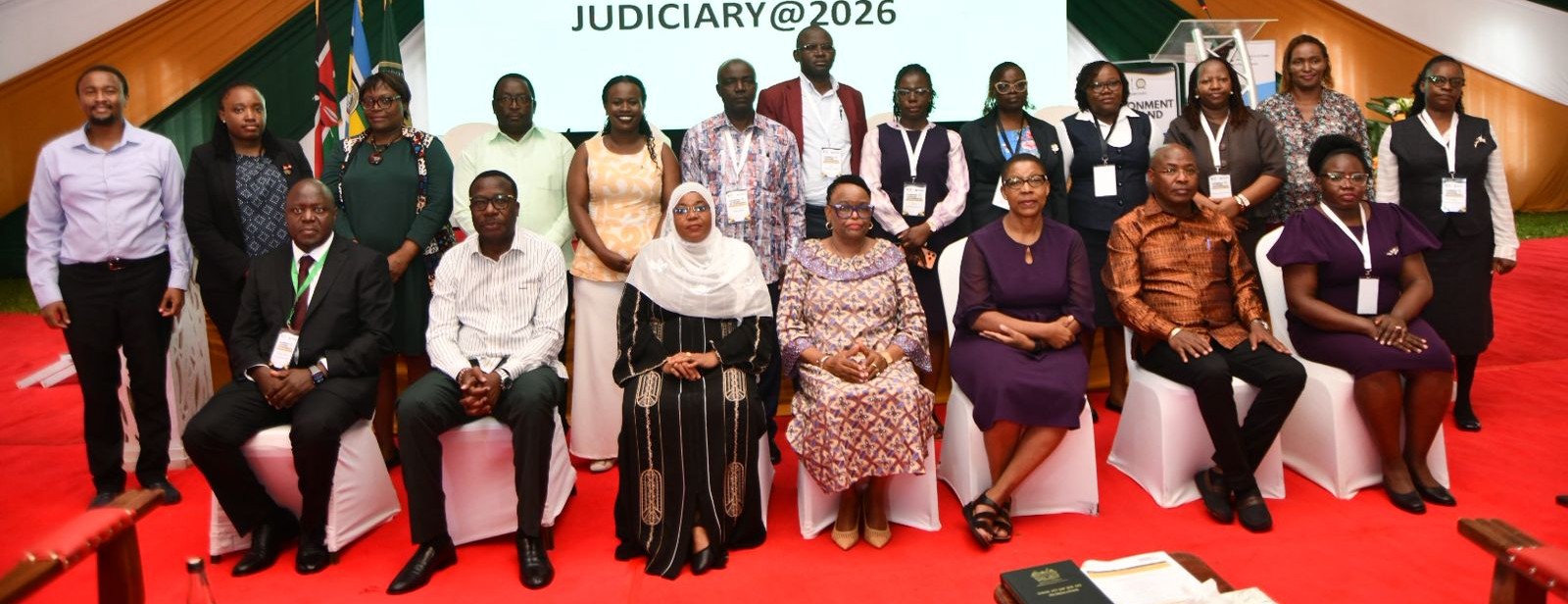
Over the week of 22-26 June 2026, I had the privilege of participating as the academia representative on the panel exploring perspectives on the mining sector during the Environment and Land Court Judges’ Conference under the theme The Green Bench: Advancing Sustainable Extractives Management, Climate Justice and the Environmental Rule of Law in a Changing Planet.
Representing academia alongside distinguished colleagues from government and industry reminded me that sustainable mining is not merely an engineering challenge, nor purely a legal, environmental or economic one. It is fundamentally a systems challenge.
The discussions revolved around mineral justice, community participation, responsible investment, mine closure, climate resilience, critical minerals, and intergenerational equity. Yet beneath these themes lay one central question:
How do we ensure that mining leaves societies richer rather than poorer once the minerals are exhausted?
For me, this question goes back to the central motivation of my recent research, which sought to integrate geospatial modelling and systems thinking into mine planning and governance through the development of the Taita Taveta Integrated Mine Planning Model (TIMPM).
Challenging Traditional Mineral Valuation and Reporting
I also had the opportunity to challenge conventional approaches to reporting mineral wealth, arguing that mineral revenues and resource valuations should be more nuanced and recalibrated to reflect the time value of money, extraction costs, recovery factors, project risks, and commodity price volatility. A mineral deposit’s in-situ gross value often bears little resemblance to its recoverable economic value, while the project’s Net Present Value (NPV) may represent only a fraction of the nominal in-ground value after accounting for technical, financial, market, and temporal realities. This distinction has important implications for designing equitable tax and royalty regimes that are fair to both investors and the State, while safeguarding long-term public interests.
I further observed that Konza Technopolis should reserve a dedicated space for mining research and innovation. Mining has historically been an early adopter of frontier technologies—from remote sensing, automation, artificial intelligence, and digital twins, to advanced geospatial systems. Beyond its direct contribution, the sector generates substantial multiplier effects across the economy through backward, forward, and induced linkages, making it a strategic catalyst for industrialisation, innovation, and sustainable development.
Why the Green Bench Matters
The word Green in Green Bench is far more than a colour. Nor is it a greenwashing cliché. It is a philosophy of justice that recognises that environmental stewardship, social equity, economic prosperity, and intergenerational responsibility are inseparable.
Mining has traditionally been evaluated through tonnes extracted, export earnings, and royalties collected. While these indicators are important, they reveal only part of the story.
The more fundamental questions are:
- Are ecosystems recovering?
- Are communities becoming more prosperous?
- Are future generations inheriting opportunities rather than liabilities?
- Does mining strengthen resilience to climate change?
- Does the landscape become more productive after closure than before mining commenced?
These are the questions that make the Green Bench truly green.
The Vicious 10Ds
During my recent research work, I conceptualised what I termed the Vicious 10Ds of Mining—a portrait of what unfolds when mining governance fails. At this conference, I christened them the Decagon of Vices, defining the portrait of the mining sector in most of Africa.
They include the land-centred:
- Disputes
- Displacements
- Dispossession
- Degradation
and the social ills of:
- Deprivation
- Destitution
- Discrimination (in gender, women bearing the brunt of discrimination in compensation for labour)
and the life-threatening ills of:
- Disease
- Deformity
- Death
These are not inevitable consequences of mining. Rather, they are symptoms of governance failure. When institutions are weak, planning is fragmented, and decisions are driven by short-term gains, mining can inadvertently generate these interconnected social, environmental and economic challenges.
The encouraging reality is that every vice has a corresponding virtue. The task before policymakers, regulators, industry, academia, communities, and the Judiciary is to reverse this Decagon of Vices.
Both Procedural Rationality and Substantive Rationality
One of the recurring reflections from the panel discussion was highlighting procedural rationality and substantive rationality. Let’s also remember that sound policymaking is a prerequisite for achieving direction, coherence, and continuity in the agenda-setting processes.
Procedural rationality asks:
Did we follow the prescribed process?
Were licences issued correctly?
Was an Environmental Impact Assessment undertaken?
Were consultations held?
Were royalties collected?
These questions matter.
However, substantive rationality asks a deeper question:
Did the process actually produce the desired societal outcome?
Are communities healthier?
Has poverty reduced?
Has biodiversity recovered?
Has land been rehabilitated?
Has mining enhanced livelihoods and local economies, and the attendant questions on the atlas of economic complexity?
A mining project may satisfy every procedural requirement while still failing to deliver on substantive justice.
Sustainable mining requires both types of rationality, and benefits from a strong component of what I call spatial justice, whereby actionable location-based intelligence guides the development of transparent and participatory decisions.
Juridical versus Jurisdictional Challenges
Many mining disputes arise not because Kenya lacks laws, but because institutions often operate within overlapping mandates. This distinction between juridical and jurisdictional matters deserves greater attention.
Juridical questions concern what the law provides.
Jurisdictional questions concern who has the authority to implement, regulate and enforce those laws.
When national government, county governments, regulators, communities, investors and oversight institutions operate without coherent coordination, uncertainty emerges, often ending in litigation. Strong governance requires not only better laws, but also better institutional integration.
Systems Thinking for Sustainable Mining
Mining does not exist in isolation. Every mining operation interacts with water systems, biodiversity, agriculture, infrastructure, settlements, livelihoods, climate, and markets.
Understanding these interactions requires moving beyond linear thinking.
This was precisely the motivation behind developing TIMPM, which integrates mining, environmental and socio-economic variables into a single decision-support framework capable of exploring long-term consequences before irreversible decisions are made.
Similarly, Geographic Information Systems (GIS) allow us to visualise where impacts occur, while systems modelling helps us understand why they occur and how today’s decisions shape tomorrow’s outcomes.
As I often say:
GIS tells us where the interests and actions are, with time-based geolocation precision. Systems modelling points us to how and where phenomena are evolving over time, the key leverage points, and how to redesign policy and strategy.
The Importance of Linkages
Mining’s greatest contribution is rarely confined to the mine itself. Every direct mining job has the potential to stimulate 3-10 additional jobs in other sectors through backward, forward and induced linkages.
Therefore, the true measure of success is not simply the number of miners employed, but the extent to which mining catalyses manufacturing, services, innovation, entrepreneurship, and resilient local economies. In this regard, local value addition should not be viewed as an optional policy ambition but as a strategic pathway to inclusive development.
Towards Intergenerational Justice
Minerals are finite. Development should not be. Future generations cannot inherit depleted ore bodies. They can, however, inherit educated citizens, thriving enterprises, restored ecosystems, resilient institutions, and diversified economies.
That is the essence of intergenerational equity.
Final Reflection
Participating in the Green Bench reinforced my conviction that sustainable mining cannot be achieved by any single institution.
Government provides policy.
Academia builds capacity for a sustainable talent pipeline and offers well-researched, evidence-informed thought leadership.
Industry provides investment.
Communities provide social licence.
The Judiciary safeguards justice.
Academia provides independent evidence, innovation, and long-term thinking for sound thought leadership and policy development. That is why research and development must be taken seriously by any government, through enhanced budgetary allocations and efficiencies in spending.
Together, these institutions possess the collective capacity to reverse the Decagon of Vices/Vicious 10Ds and transform mining into a genuine driver of sustainable development.
Ultimately, the success of Kenya’s mining sector will not be judged by how much mineral wealth leaves the ground. It will be judged by how much lasting prosperity remains after the last truck leaves the mine.
Really enjoyed reading this reflection. It gave me some great insights. Keep them coming…